
CONTEXT
IBD cases among Black Americans have surged 134% since 1970 and college aged students in the 15-35 range are among the hardest hit. But existing health resources are clinical, text-heavy, and culturally tone deaf. The result: a double barrier of stigma and materials that simply don't speak to the students who need them most.






IDEA
Nobody likes to talk about gut stuff - so we made it impossible not to.
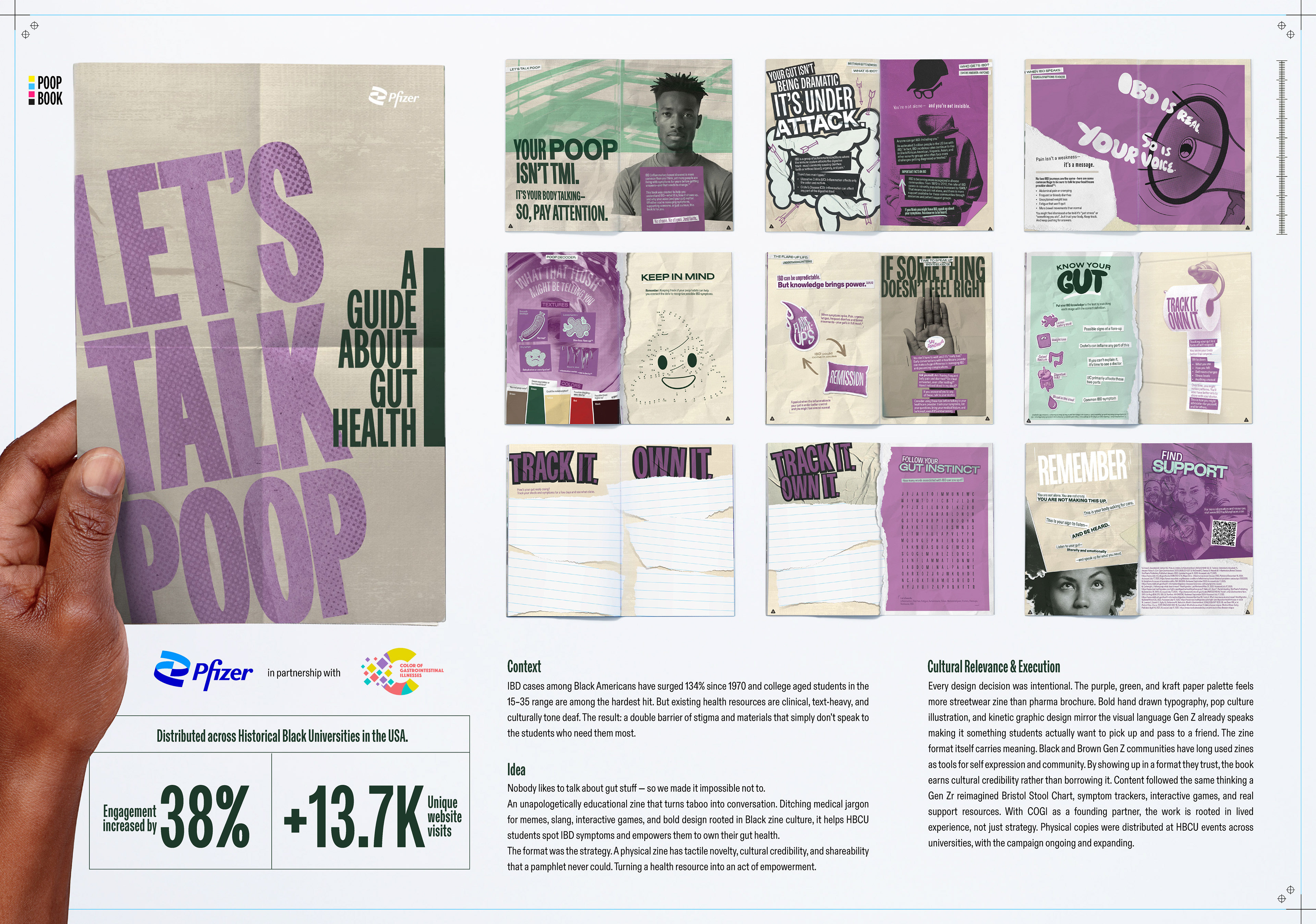
An unapologetically educational zine that turns taboo into conversation. Ditching medical jargon for memes, slang, interactive games, and bold design rooted in Black zine culture, it helps HBCU students spot IBD symptoms and empowers them to own their gut health.
The format was the strategy. A physical zine has tactile novelty, cultural credibility, and shareability that a pamphlet never could. Turning a health resource into an act of empowerment.
CULTURAL RELEVANCE & EXECUTION
Every design decision was intentional. The purple, green, and kraft paper palette feels more streetwear zine than pharma brochure. Bold hand drawn typography, pop culture illustration, and kinetic graphic design mirror the visual language Gen Z already speaks making it something students actually want to pick up and pass to a friend. The zine format itself carries meaning. Black and Brown Gen Z communities have long used zines as tools for self expression and community. By showing up in a format they trust, the book earns cultural credibility rather than borrowing it. Content followed the same thinking a Gen Zr reimagined Bristol Stool Chart, symptom trackers, interactive games, and real support resources. With COGI as a founding partner, the work is rooted in lived experience, not just strategy. Physical copies were distributed at HBCU events across universities, with the campaign ongoing and expanding.